
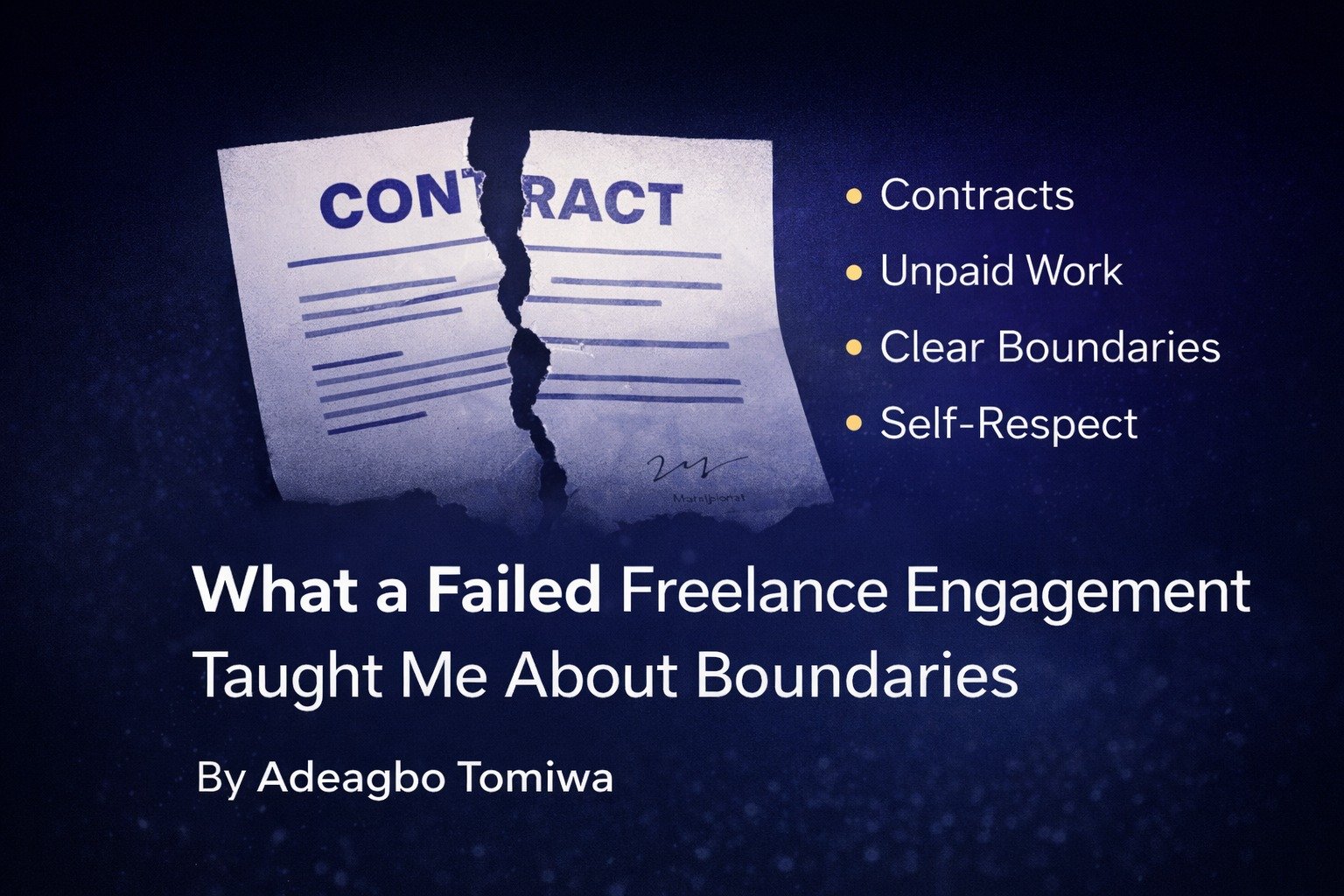
What a Failed Freelance Engagement Taught Me About Boundaries
Freelancing teaches you many things — some technical, some personal, and some you only learn the hard way.
Recently, I went through a freelance experience that didn’t end as planned. It was frustrating at the time, but it turned out to be one of the most valuable lessons I’ve learned in my career as a software developer.
I’m sharing this not to blame anyone or start drama, but to document growth, clarify boundaries, and help other developers avoid similar mistakes.
1. A Contract Is Not Just a Formality
One of the biggest lessons I learned is that a contract only works if both sides actually respect it.
Even when terms are clearly stated — payment structure, timelines, responsibilities — it’s still important to:
- Reconfirm expectations early
- Address payment delays immediately
- Put every change in writing
A contract protects you, but only if you’re willing to enforce it.
2. “Test Work” Should Never Be Free
I worked on multiple real-world projects under the assumption that they were part of an official engagement. Designs were reviewed, changes were requested, and progress was praised.
Later, some of that work was described as “just a test.”
If it’s being reviewed, revised, and used, it’s not a test — it’s work.
Going forward, I will never:
- Do unpaid “tests” on production-level projects
- Start work without clear payment terms
- Assume goodwill replaces agreement
3. No Payment, No Code
This was a hard but necessary boundary to learn.
As developers, we sometimes hesitate to enforce this because we don’t want to seem difficult. But the truth is simple:
Source code is leverage.
Releasing code before payment removes the only protection a freelancer truly has. From now on:
- Payments come before full handover
- Milestones are tied to compensation
- Verbal assurances are not enough
This isn’t arrogance — it’s professionalism.
4. Standing Up for Yourself Is Not Misconduct
One thing that surprised me was how quickly asking for agreed payment was reframed as a “character issue.”
That taught me an important truth:
Standing up for your rights will sometimes make people uncomfortable — especially when they benefit from your silence.
Professionalism doesn’t mean obedience. It means clarity, honesty, and self-respect.
5. Growth Means Better Boundaries
I don’t regret the experience. It sharpened my instincts and improved how I approach freelance work.
What I’m taking forward:
- Clear payment timelines
- Written confirmation for every scope change
- Firm boundaries around deliverables
- Confidence in the value of my skills
Every experience — good or bad — adds to who you become as a professional.
Final Thoughts
Freelancing isn’t just about writing code or shipping products. It’s about learning how to protect your time, your energy, and your value.
This experience reminded me that growth isn’t always comfortable — but it’s always useful.
On to better projects, better clients, and better terms.


No comments yet — be the first to share your thoughts.